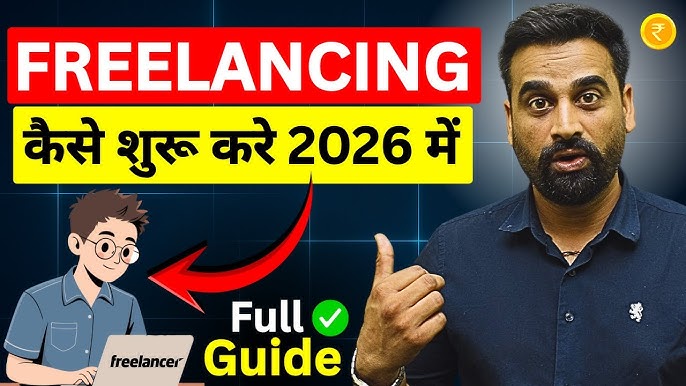

How to Start Freelancing from Zero (Complete Beginner Guide 2026)
How to Start Freelancing from Zero (Complete Beginner Guide 2026)
In today’s digital world, freelancing has become one of the most powerful ways to earn money online. Whether you want to escape a 9–5 job, build a side income, or work from home, freelancing offers complete freedom. The best part? You can start from zero—no office, no boss, just your skills and a laptop.
In this blog, you’ll learn how to start freelancing from scratch, step by step, and turn it into a stable income source.
💡 What is Freelancing?
Freelancing means offering your skills as a service to clients on a project or contract basis. You are not a full-time employee—you work independently and get paid per task or project.
Examples of freelancing services:
Content writing
Graphic designing
Website development
Digital marketing
Video editing
You can work with clients from anywhere in the world, right from your home.
🎯 Step 1: Choose a Skill
The first step is to select a skill you want to offer. If you don’t have one, don’t worry—you can learn it.
Beginner-friendly freelancing skills:
Content writing
Social media management
Data entry
Graphic design (using Canva)
WordPress website setup
Video editing
👉 Pro Tip: Start with one skill only. Don’t try to learn everything at once.
📚 Step 2: Learn the Skill
Thanks to the internet, learning a skill is easier than ever. You can use free resources like YouTube, blogs, or affordable online courses.
Focus on:
Basics of your skill
Tools and software
Real-world examples
Practice daily for at least 1–2 hours. Skill mastery comes with consistency.
🛠️ Step 3: Build a Portfolio
To get clients, you must show your work. A portfolio is a collection of your best projects.
Include:
Sample work
Demo projects
Case studies
Example:
If you are a content writer, write 5–10 blog posts and share them via Google Docs or a simple website.
👉 Tip: You can even do free work initially to build your portfolio.
🌐 Step 4: Join Freelancing Platforms
Now it’s time to find clients. Create profiles on popular freelancing platforms such as:
Fiverr
Upwork
Freelancer
PeoplePerHour
While creating your profile:
Use a professional photo
Write a clear and strong description
Highlight your skills and services
✍️ Step 5: Write Strong Proposals
Your proposal is the key to getting hired.
A good proposal should:
Understand the client’s problem
Offer a clear solution
Be short and professional
Example:
“Hi, I can help you write SEO-optimized blog posts that rank on Google and drive traffic…”
👉 Avoid copy-paste proposals. Personalization increases your chances of getting selected.
💰 Step 6: Set Your Pricing
As a beginner:
Start with low or competitive pricing
Focus on gaining experience and reviews
Increase your rates gradually
Once you build trust and credibility, clients will be willing to pay more.
⭐ Step 7: How to Get Your First Client
Getting your first client is the hardest part—but it’s possible.
Ways to find your first client:
Optimize your Fiverr gigs
Send daily proposals on Upwork
Promote your services in Facebook groups
Reach out on LinkedIn
👉 Tip: Be patient. It may take time, but consistency works.
🔄 Step 8: Stay Consistent
Freelancing success doesn’t happen overnight.
To grow:
Send proposals daily
Improve your skills regularly
Communicate professionally with clients
Consistency is the key to long-term success.
📈 Step 9: Build Your Personal Brand
Don’t depend only on freelancing platforms. Build your own brand.
You can:
Share content on LinkedIn
Post tips on Instagram
Start your own blog or website
When your brand grows, clients will come to you directly.
🚀 Step 10: Scale Your Freelancing Business
Once you start getting regular clients:
Increase your rates
Work with long-term clients
Build a team
Start your own agency
Freelancing can grow into a full business if done right.
